Destinations
Places to Visit in New York for Iconic Thrills
By colepatterson
November 23, 2026
Field Notes
Think New York is only crowded streets and endless choices?
It can feel that way, but you don’t need to cram every landmark to get the city’s iconic thrills.
This quick guide lists 10 places to visit in New York, explains what makes each worth your time, and gives realistic 3–5 day plans plus one-day pick lists so you leave feeling satisfied, not exhausted.
Pick a few favorites, pace your days, and you’ll get the skyline views, museums, parks, and moments that really stick.
10 Must-See New York Attractions at a Glance
New York’s big enough to overwhelm just about anyone planning a first trip, so it helps to start with a shortlist that balances landmarks, museums, parks, skyline views, memorials, and entertainment. Think of this as your home base, a quick scan to orient yourself before digging into the details further down the page.
A 3 to 5 day visit gives you room to hit most of these without rushing. Got only one day? You’ll need to pick a handful and let the rest wait for next time. That’s okay. Honestly, trying to cram all ten into 24 hours would leave you more exhausted than amazed.
- Statue of Liberty: Liberty Island (ferry from Battery Park), 3-4 hours, approx. $24-26, a symbol of the country you can actually stand beneath
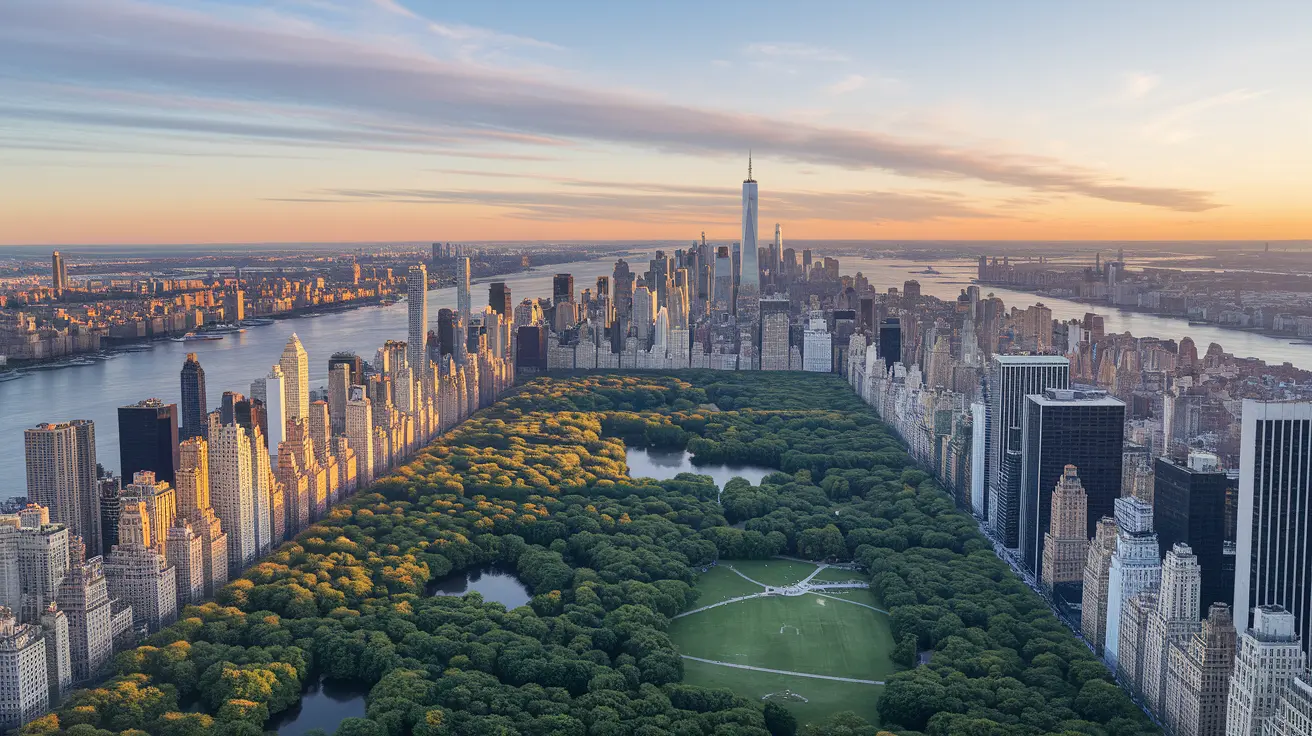
- Central Park: Manhattan (Midtown to Upper Manhattan), 2-4 hours, free, 843 acres of green space in the middle of the skyscrapers
- Empire State Building: Midtown Manhattan, 60-90 minutes, approx. $44-80, classic Art Deco views from one of the city’s original giants
- Times Square: Midtown Manhattan, 30-60 minutes, free, the neon chaos everyone pictures when they think of New York
- The Metropolitan Museum of Art: Upper East Side, 2-4 hours, approx. $30, a collection spanning roughly 5,000 years under one roof
- One World Observatory: Lower Manhattan, 60-90 minutes, approx. $38-48, sweeping harbor views from the tallest building in the city
- 9/11 Memorial and Museum: Lower Manhattan, 2-3 hours, approx. $30, a quiet, moving space that documents a defining moment in the city’s history
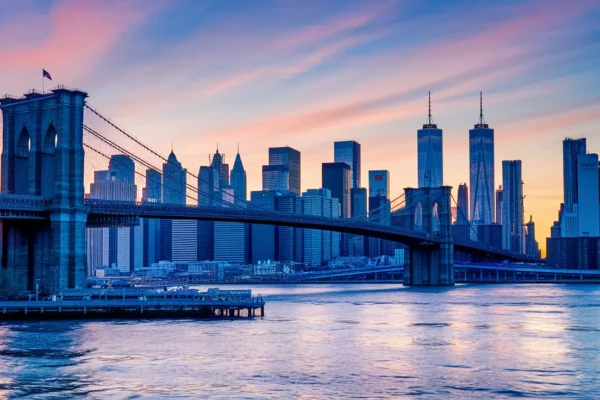
- Brooklyn Bridge: spans Manhattan to Brooklyn, 1-2 hours, free, a walk that delivers some of the best skyline photos you’ll take all trip
- The High Line: Manhattan’s West Side, 60-90 minutes, free, an elevated park built on old train tracks with great people watching
- Broadway: Midtown theater district, 2.5-3 hours per show, approx. $50-250+, live performances ranging from timeless classics to brand new hits
For deeper details on any of these, including history, setting, and what makes each one worth your time, check the category sections below. Want help sequencing your days? Jump to the itinerary section. And for current prices, hours, and booking requirements, the practical planning section near the end has you covered.
Iconic Manhattan Landmarks and Skyline Views
(((alt-img2)))
Manhattan’s most famous sights fall into a few different buckets, and it helps to know which is which before you start planning. Some are historic monuments you visit to stand in the presence of something meaningful. Others are observation decks built purely for the view. A few are public memorials, and some are just loud, bright, always-on city spaces. Knowing the difference helps you set the right expectations.
Statue of Liberty and Ellis Island
The Statue of Liberty was dedicated on October 28, 1886, and stands approximately 305 feet tall from base to torch. It’s become the defining symbol of the country for generations of visitors and immigrants alike, and its neighbor, Ellis Island, tells the human side of that story. Millions passed through Ellis Island’s immigration halls in the late 1800s and early 1900s, and the museum there walks you through what that experience was actually like.
Ferries to both islands depart near Battery Park, at the southern tip of Manhattan. For more on Battery Park itself and the waterfront around it, check the parks section further down.
Empire State Building and Times Square
Completed in 1931, the Empire State Building is one of the city’s great Art Deco landmarks. It’s got that old New York feel, all polished metal and dramatic lobby ceilings, and the 86th-floor open-air deck gives you a view that’s hard to beat. Want to go higher? There’s also a 102nd-floor observatory.
Times Square sits nearby in Midtown, but it’s its own thing entirely. No ticket required, no observation deck, just blinking billboards, street performers, and a crowd that never really thins out. It’s worth seeing, but it’s a different kind of experience than the Empire State Building, so don’t feel like you need to link the two into one stop.
One World Observatory and the 9/11 Memorial
These two sit close together in Lower Manhattan, but they serve very different purposes. One World Trade Center rises 1,776 feet, and its observatory, which opened on May 29, 2015, gives you wide views over the harbor, including a good look at the Statue of Liberty from above.
The 9/11 Memorial plaza and museum, just steps away, is a reflective space built to document and commemorate the September 11 attacks. It’s quiet, it’s heavy, and it’s worth treating as its own separate visit rather than rushing through on the way to the observatory.
Rockefeller Center and Top of the Rock
Rockefeller Center is known for its Art Deco architecture and public art, including the famous gilded Prometheus statue. Top of the Rock, its observation deck, is one of the best spots in the city for photography, mostly because it actually includes the Empire State Building in the frame, something you obviously can’t get from the Empire State Building itself.
Radio City Music Hall sits right nearby too, a performance venue worth knowing about on its own, though we won’t build an evening route around it here.
If you’re trying to choose between the observation decks, here’s the simple way to think about it. The Empire State Building gives you historic atmosphere and that classic New York feel. One World Observatory gives you harbor views and a sense of scale. Top of the Rock gives you the photo that includes the Empire State Building in the skyline. Pick based on what you want to see, not just what’s closest.
New York Museums and Cultural Attractions Worth Your Time
(((alt-img3)))
The Metropolitan Museum of Art, founded in 1870, sits on Museum Mile at 1000 Fifth Avenue and covers roughly 5,000 years of art and human history. It’s enormous, genuinely one of the largest museums in the world, so trying to see everything in one visit is a losing game.
Final Words
Start with the essentials: a balanced shortlist that mixes landmarks, museums, parks, skyline views, memorials, and evening entertainment.
You’ll find ten must-see spots — Statue of Liberty, Central Park, Empire State Building, Times Square, The Met, One World Observatory, 9/11 Memorial and Museum, Brooklyn Bridge, the High Line, and Broadway — plus neighborhood, parks, museum, seasonal, family, itinerary, and practical-planning sections to turn choices into a plan.
Use the planning tips to pace your days; with this guide to places to visit in new york, you’re set for a relaxed, memorable trip.
FAQ
Q: Is $1,000 enough for 4 days in New York City?
A: A $1,000 budget for 4 days in New York City can work, but it’s tight; expect budget lodging, subway travel, mostly free sights, cheap eats, and limiting paid attractions to stay near $250/day.
Q: How much does an average trip to New York City cost?
A: An average trip to New York City typically costs about $150–$250 per person per day; expect $450–$1,250 for a 3–5 day stay, excluding flights and big splurges.
Q: Is $2000 enough for 5 days in New York?
A: A $2,000 budget for 5 days in New York City is generally enough for a comfortable mid-range trip—about $400/day—covering mid-level hotels, several attractions, meals out, and local transport.
Q: What is the most visited place in New York?
A: The most visited place in New York is Times Square, known for its bright signs, theater-district energy, and heavy pedestrian traffic that draws first-time and repeat visitors alike.