
Thinking a Eurail pass will save you cash on any European trip?
Think again.
Passes shine when you’re hopping between countries and want freedom; point-to-point tickets win when your dates are fixed and you can book early.
This quick guide lays out the simple math, like trip length, number of countries, how many trains, and advance-fare timing, so you’ll know which option fits your pace and wallet, and when a mixed approach makes the most sense.
Quick Guide to Choosing Between Eurail Passes and Point‑to‑Point Tickets
A Eurail pass gives you unlimited train travel across 33 European countries during a set window. You pick a travel period, activate the pass, and hop on most trains without buying individual tickets. Point‑to‑point tickets work the opposite way: you buy a separate fare for each journey. The price depends on the route, the date, how far in advance you book, and which train you choose.
Passes make sense when you’re moving quickly between countries, taking long‑distance trips, or keeping your schedule open. Visiting Paris, Brussels, Amsterdam, and Berlin in eight days? A pass can cover all those legs without the hassle of booking four separate international tickets. Point‑to‑point tickets win when your trip is short, you’re staying mostly in one country, or you know your exact travel dates weeks ahead and can lock in advance fares.
Neither option is automatically cheaper. The right choice depends on how you travel, not just where you go.
Quick decision framework:
- Trip length: Passes usually pay off on trips of 10+ days with frequent train travel. Point‑to‑point often wins for trips under 7 days.
- Number of countries: Visiting 3+ countries in a short window? Lean toward a pass. Staying in 1 country almost always favors individual tickets.
- Travel frequency: Planning a train ride every day or every other day? A pass becomes cost‑effective. Taking 3–4 trains over two weeks? Individual tickets will likely be cheaper.
- Booking flexibility: If your dates might change or you want to decide routes on the fly, a pass removes rebooking risk. Fixed plans let you grab advance fares 60–90 days out, sometimes as low as €9–€29 per segment.
- Route types: Long high‑speed and cross‑border journeys have expensive walk‑up fares, making passes competitive. Short regional hops cost €5–€15 each, so a pass wastes money unless you’re taking many in one day.
The biggest exception is discount advance fares. Book a Paris–Amsterdam high‑speed ticket three months early and you might pay €35 instead of €140. Do that for every leg, and your total point‑to‑point cost can drop below even a discounted pass price. But miss those early windows or travel during summer peak, and last‑minute fares shoot up.
Pros and Cons of Eurail Passes

Passes shine when you value freedom over rigid schedules. You can wake up in Vienna, decide over breakfast to visit Salzburg for the day, and board the next train without opening your laptop or standing in a ticket line. That spontaneity is the main draw, especially for travelers who want to follow weather, local tips, or their own energy levels.
On the downside, passes often require paid seat reservations on popular high‑speed and night trains. Those fees add up fast. A pass also locks you into a set number of travel days, so you lose value if you take fewer trips than planned or spend half your pass period sitting still in one city.
Pros:
- Unlimited travel on most trains during your active days
- Easy multi‑country movement without buying separate cross‑border tickets
- No need to book every segment in advance
- Simplified budgeting with one upfront cost
Cons:
- High‑speed and night trains usually require paid seat reservations (€10–€35 each)
- Pass price can exceed total point‑to‑point cost on short or regional‑heavy trips
- Travel days must be used within the pass validity window (unused days have no refund value)
- Not valid on all trains (some private or low‑cost operators excluded)
Passes work best for travelers who plan to move fast, cross borders often, and don’t mind paying a little extra for maximum flexibility. If your trip style is “I’ll figure it out when I get there,” the convenience premium usually feels worth it.
Pros and Cons of Point‑to‑Point Tickets
Point‑to‑point fares vary wildly depending on when and how you book. A Rome–Florence high‑speed ticket bought two months early might cost €15. The same seat purchased the day of travel can jump to €60. Operators release advance inventory at steep discounts to fill trains early, so travelers with fixed plans can save 50–70% by planning ahead.
Pros:
- Lowest possible cost if you book advance fares early
- No wasted travel days, you only pay for trips you actually take
- Seat reservations included in the ticket price (no separate fee)
- Access to budget operators and promotional flash sales
Cons:
- Cheap advance fares are often non‑refundable and tied to a specific train
- Booking multiple international legs across different operator sites takes time
- Last‑minute walk‑up fares on high‑speed routes can be very expensive
- Less flexibility to change plans without rebooking fees or losing ticket value
The trade‑off is simple: predictability versus flexibility. If you book every segment in January for a June trip and your schedule goes exactly as planned, point‑to‑point tickets will almost always cost less than a pass. But if your Paris–Lyon train gets delayed and you miss your connection to Barcelona, or you decide to skip a city and stay an extra day somewhere else, you’ll either pay rebooking fees or lose the ticket entirely.
Real Cost Comparison Examples

These examples use typical 2024 fare ranges to show how booking timing and route type affect the pass‑versus‑tickets decision. Advance fares assume booking 60–90 days out. Last‑minute fares reflect walk‑up or same‑week purchases. Eurail day rate is the pass price divided by the number of travel days included.
| Route | Average Advance Fare | Last‑Minute Fare | Eurail Day Rate (example) | Winner |
|---|---|---|---|---|
| Paris–Amsterdam | €35 | €140 | €60 | Advance ticket |
| Rome–Florence | €15 | €60 | €60 | Advance ticket |
| Berlin–Prague | €20 | €80 | €60 | Advance ticket |
| Barcelona–Madrid | €30 | €120 | €60 | Advance ticket / Pass (if spontaneous) |
| Munich–Venice | €40 | €110 | €60 | Advance ticket / Pass (tight margin) |
The pattern is clear: advance fares beat the per‑day pass cost almost every time. But if you can’t book early or your plans shift, last‑minute walk‑up fares quickly make a pass look cheaper. The crossover happens when your average segment cost at walk‑up rates exceeds the pass day rate. For a 5‑day Global Pass priced around €300, that’s €60 per travel day. If you’re taking two long legs on one travel day, you spread that €60 across both trips, which can beat even moderate last‑minute fares.
Reservation Requirements and Hidden Costs

Not all trains are “hop on and go” with a Eurail pass. High‑speed services in France (TGV), Spain (AVE), Italy (Frecciarossa), and international routes like Paris–Barcelona or Milan–Munich require seat reservations even if you hold a valid pass. The reservation is a separate fee, typically €10–€35 per journey, and popular trains can sell out weeks ahead during summer and holidays.
Regional and slower intercity trains usually don’t require reservations. In Germany, Austria, Belgium, the Netherlands, and most of Switzerland, you can board with just your pass and find an unreserved seat. Night trains are a middle case: sleeper berths and couchettes almost always require a paid supplement (€20–€80+), but if you book a reclining seat in a standard coach car, the fee is often lower or sometimes waived.
Typical reservation fees by region:
- France (TGV, Intercités de Nuit): €10–€30 per segment. Book early or risk sold‑out inventory
- Spain (AVE, Avant): €10–€25. Mandatory on most long‑distance high‑speed routes
- Italy (Frecciarossa, Frecciargento): €2–€15. Regional trains have no fee
- Cross‑border high‑speed (Eurostar, Thalys): €10–€90 depending on class and route. Limited Eurail seat allocations
The hidden cost isn’t just the fee itself but the time and hassle of making reservations. You can’t always do it online. Some routes require booking at a station desk or calling an operator. If you’re taking six high‑speed legs on a 10‑day pass, budget an extra €60–€180 for reservations. Factor that into your total pass cost when comparing to point‑to‑point tickets that include reserved seats in the base fare.
Best Scenarios for Each Option

Passes and point‑to‑point tickets each excel in different travel situations. Your itinerary shape and travel personality matter more than the raw number of days or cities.
Ideal scenarios for a Eurail pass:
- Visiting 4+ countries in 10–14 days with frequent border crossings
- Taking 6+ long‑distance train journeys in a short window
- Keeping your schedule flexible or deciding routes based on weather, events, or local advice
- Traveling during peak season when last‑minute ticket prices spike
- Planning spontaneous day trips from a base city (staying in Munich and taking regional trains to Salzburg, Innsbruck, and Nuremberg on different days)
Ideal scenarios for point‑to‑point tickets:
- Staying in one or two countries with a simple city‑pair route (Paris–Lyon–Nice)
- Taking fewer than 5 train journeys over 7–10 days
- Booking your trip 2–3 months in advance with fixed dates
- Using mostly regional or short‑distance trains where walk‑up fares are already cheap
- Traveling off‑peak (late fall, winter, early spring) when advance discounts are plentiful and seat availability is high
Sometimes a mixed strategy makes the most sense. Buy advance tickets for the expensive high‑speed legs you know you’ll take, like your arrival day Paris–Lyon trip. Then use a short‑duration pass or day tickets for flexible regional travel later in the trip. If you’re spending five days in southern Germany after a few fixed intercity hops, a 3‑day regional pass can cover spontaneous side trips while you save money by locking in the long hauls early at discount fares.
Sample Itineraries With Price Breakdowns
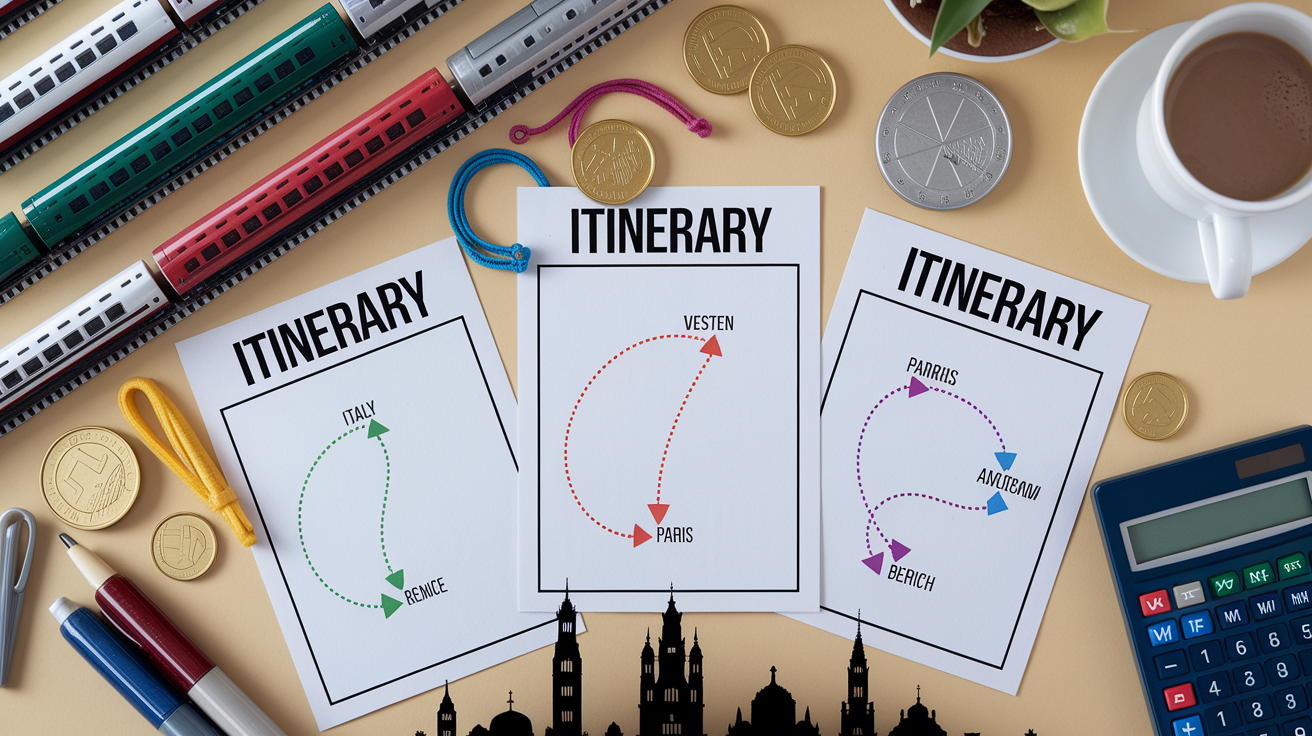
Itinerary 1: 7‑day trip in Italy (Rome–Florence–Venice–Milan)
Point‑to‑point fares booked in advance: Rome–Florence €15, Florence–Venice €20, Venice–Milan €25, total €60. Add two short regional hops (€10 each) for day trips, total €80. A 4‑day Eurail Italy Pass costs around €220. Reservations on Frecciarossa trains add roughly €10 per segment (€40 total), bringing the pass to €260. Recommendation: buy point‑to‑point tickets and save €180.
Itinerary 2: 10‑day trip in 3 countries (Amsterdam–Brussels–Paris–Lyon–Barcelona)
Point‑to‑point advance fares: Amsterdam–Brussels €25, Brussels–Paris €29, Paris–Lyon €30, Lyon–Barcelona €40, total €124. If booked last‑minute or mid‑summer, fares rise to roughly €60 + €80 + €70 + €90 = €300. A 4‑day‑in‑1‑month Eurail Global Pass runs about €280, plus €60 in high‑speed reservations (€15 each for four segments) = €340. Recommendation: advance tickets win if booked early. Pass wins if booking late or keeping plans flexible.
Itinerary 3: 14‑day fast‑paced trip (Paris–Brussels–Amsterdam–Berlin–Prague–Vienna–Munich–Zurich)
Point‑to‑point last‑minute total roughly €500–€700 depending on season and class. A 7‑consecutive‑day or 7‑days‑in‑1‑month Global Pass costs around €380–€450. High‑speed reservations for five legs add about €80. Total pass cost €460–€530. Recommendation: pass saves money if you can’t book advance fares and offers flexibility for spontaneous stops. Point‑to‑point cheaper only if every leg locked in 60+ days early at promo rates.
Final Words
Pick your pace: a Eurail pass shines when you want hop-on flexibility across countries, while point-to-point tickets usually win for short, single-country trips with fixed dates.
This guide covered pros and cons, cost comparisons, reservation fees, a quick decision framework, and three sample itineraries so you can match the choice to your trip.
For a simple rule on how to choose between Eurail pass and point-to-point tickets: choose a pass for long, multi-country, flexible travel; pick individual fares for short, set plans. Either way, a little planning makes travel easier and more enjoyable.
FAQ
Q: When should I choose a Eurail pass over point-to-point tickets?
A: A Eurail pass is best when you plan many long or cross-country train days, want flexible dates, and travel almost daily across several countries, avoiding buying lots of separate tickets.
Q: When are point-to-point tickets the better choice?
A: Point-to-point tickets are better when you have a short trip, stay mostly in one country, travel only a few train days, or can book cheap advance fares for fixed schedules.
Q: How do I decide based on trip length, countries, travel frequency, and flexibility?
A: Decide by length and style: under 5 days or one country — buy tickets; 5–10 days and 2–3 countries — compare both; daily travel or 3+ countries — lean toward a pass for flexibility.
Q: Do Eurail passes usually save money?
A: Eurail passes sometimes save money when you take many long or frequent trips; they often cost more for short, single-country trips, and reservations can reduce or erase savings.
Q: What reservation and hidden costs should I plan for with a Eurail pass?
A: With a Eurail pass expect mandatory seat reservations on some high-speed and night trains (€10–€35), sleeper supplements, and occasional booking fees, while regional trains often need no reservation.
Q: How does booking in advance affect point-to-point versus pass value?
A: Booking early usually makes point-to-point fares much cheaper, sometimes up to 70% off, while last-minute tickets and peak high-speed routes can become expensive, improving a pass’s relative value.
Q: Can I mix Eurail passes and point-to-point tickets on the same trip?
A: You can mix them: use a pass for flexible long legs and buy advance point-to-point tickets for short routes or reservation-heavy trains to cut costs and keep options open.
Q: What’s a quick method to compare costs for my trip?
A: List each route, check advance fares for those journeys, calculate the pass day rate and add likely reservation fees, then compare totals to see which option is cheaper and more convenient.