

Booking high-speed trains in Europe is often easier and cheaper than flying—if you stop treating it like a mystery.
This step-by-step guide walks you through the exact booking flow so you can lock in low fares and a guaranteed seat.
You’ll learn what to enter (stations and dates), when reservations are required, which fare types save the most, and how to pay without getting hit by currency fees.
By the end you’ll have a clear plan: pick the right platform, snag the best ticket, download your e-ticket, and avoid the timing and seat mix-ups that ruin trips.
Immediate Steps to Book High‑Speed Trains in Europe Successfully
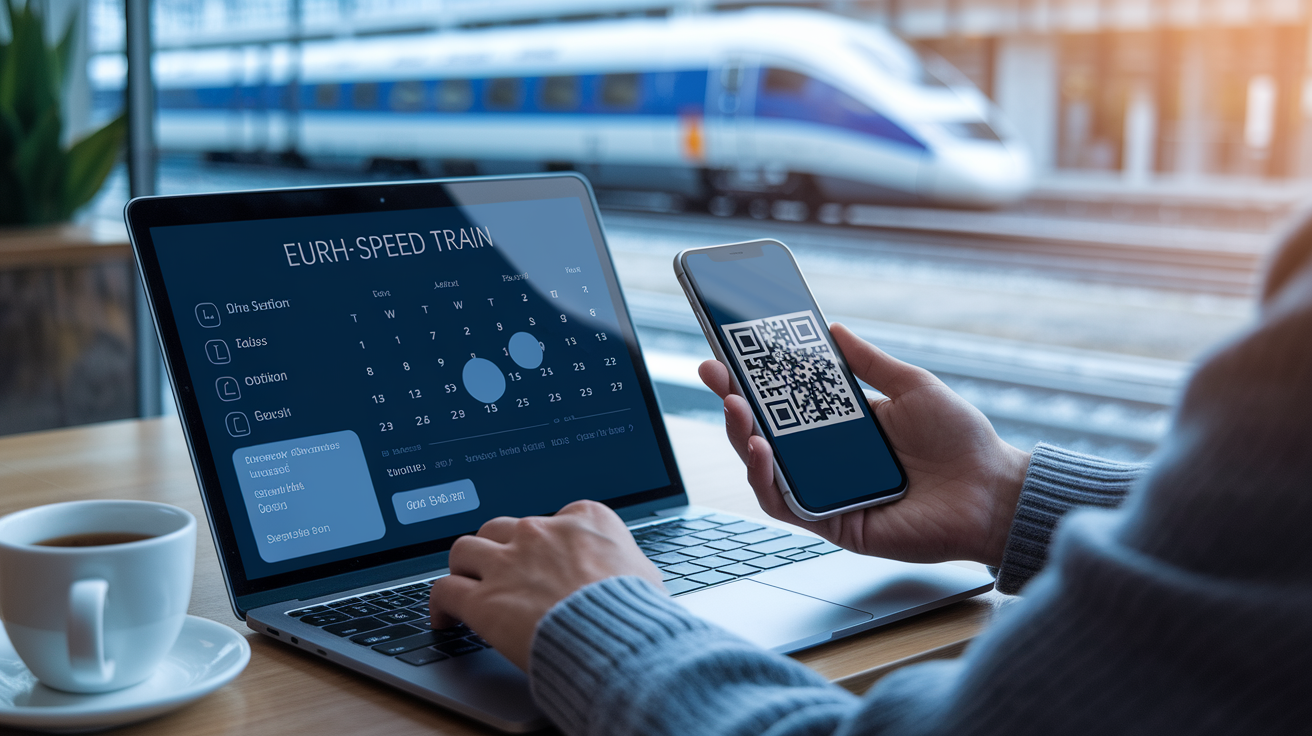
The booking flow stays consistent no matter which platform you pick. Here’s what you’ll do:
- Enter your departure and arrival stations. Type the city name and grab the main station from the dropdown.
- Choose one-way or return. Some routes (Spain, Britain, Ireland) show cheaper round-trip fares, so check both.
- Select your travel date. Pull up the calendar. Booking windows open 12 months out in Germany and Switzerland, 3 to 6 months in France and Italy, 2 to 6 months in Spain, 3 months in Britain.
- Pick a specific departure time. Scan the list showing duration, changes, and train type (TGV, ICE, AVE, Frecciarossa).
- Choose ticket type and class. You can grab discounted advance fares (often 50 to 60% cheaper but locked in) or flexible tickets. Second or first class.
- Choose delivery option. Most send e-tickets or QR codes to your email. Save it to your phone or screenshot it.
- Complete payment. Card details, confirm, done. Instant confirmation and your ticket file.
High-speed trains like TGV, AVE, and ICE hit 320 km/h and connect major cities in hours. Most French, Italian, Spanish, and Eurostar routes need seat reservations on top of your ticket, adding €6 to €35. Booking early locks in the best discounts and guarantees space, especially on busy routes or during holidays.
Understanding High‑Speed Train Operators and Which One to Book
Each operator runs its own system, schedules, and reservation rules. Eurostar connects London to Paris, Brussels, and Amsterdam with mandatory reservations and security checks that feel like airports. TGV covers France and cross-border runs into Switzerland, Italy, and Spain, also requiring reservations most of the time. Germany’s ICE offers high-speed connections across Central Europe with optional reservations, so if you buy a flexible ticket you can hop on any train along that route. Spain’s AVE and Renfe operate between Madrid, Barcelona, Seville, and beyond with mandatory seat bookings and big early-bird discounts. Italy has two competing operators. Frecciarossa (Trenitalia) and Italo both run 300 km/h trains on the Milan–Rome–Naples corridor. Both require seat reservations but offer competitive pricing and frequent schedule changes that can help last-minute planners.
Eurostar: Mandatory reservations. Security screening required. Strict check-in deadlines (30 minutes minimum). Open tickets not allowed.
TGV (France): Mandatory reservations on most routes. Booking opens 4 to 6 months ahead depending on the line. Discounted fares pop up earliest on Gare de Lyon departures.
ICE (Germany): Reservations optional. Flexible tickets let you board any train that day. Booking opens up to 12 months out. Sparpreis discount fares are train-specific.
AVE/Renfe (Spain): Mandatory reservations. Booking opens 2 to 6 months ahead. Round-trip fares sometimes cheaper than two one-ways.
Frecciarossa and Italo (Italy): Mandatory reservations. Booking opens up to 6 months for Frecce, similar for Italo. Frequent schedule updates and flash sales.
Best Platforms to Book European High‑Speed Train Tickets

You can book directly from national operators or through aggregator sites that compare multiple companies in one search.
| Platform Type | Pros | Cons |
|---|---|---|
| National operator sites (SNCF, DB, Trenitalia, Renfe, SBB) | Often cheapest for domestic routes. No middleman fees. Full control over seat maps and fare rules. Direct customer service from the railway | Multi-country trips need multiple bookings. Interfaces and languages vary. Some sites less user-friendly for non-residents |
| Aggregators (Trainline, Omio, Rail Europe) | Compare operators side by side. Book multi-leg international journeys in one go. English customer service. E-tickets delivered to email and app | Booking fees common (3% per ticket or flat fee around €6.95 per basket). Occasionally higher base fares. Seat selection and change policies less flexible |
| Hybrid approach | Use aggregators to research schedules and prices, then book direct with the operator to skip fees and access better refund terms | Takes extra time. Requires creating accounts on multiple operator sites |
Before you pay, check that the platform supports e-tickets or mobile QR codes and offers customer service in a language you understand. Aggregators simplify complex itineraries but national operator sites give you the most control and often the lowest total cost for single-country trips.
Comparing Fare Types Before Booking High-Speed Train Tickets
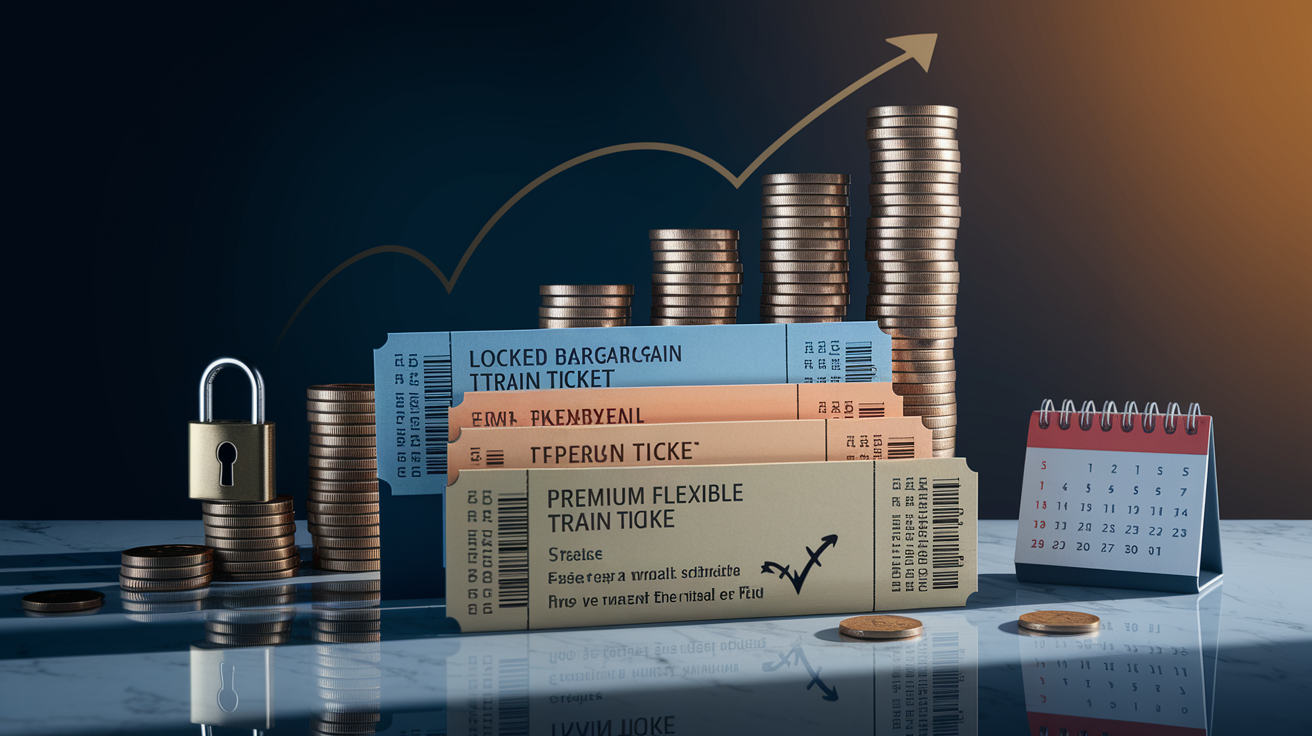
European high-speed operators use dynamic pricing. Ticket costs rise as the departure date gets closer and seats sell out. Advance purchase fares can be 50 to 60% cheaper than walk-up prices, but they come with strict conditions.
Discounted advance fares: Train-specific. Non-refundable and non-exchangeable in most cases. You must board the exact departure shown on your ticket. Lowest prices appear 3 to 6 months before travel. Examples include Sparpreis (Germany), Prems (France), Super Economy (Italy), Promo/Promo+ (Spain).
Semi-flexible fares: Allow changes for a fee (typically €10 to €30). Partial refunds possible before departure. Slightly pricier than advance fares but still discounted.
Flexible/full-price fares: Valid on any train that day on the same route (where allowed). Fully refundable before or shortly after departure. Most expensive option. Useful when plans are uncertain.
First class upgrade: Adds 30 to 80% to ticket cost. Larger seats, quieter carriages, power outlets, complimentary snacks or meals on some services. Worth it on long journeys or when advance first-class fares approach second-class flexible prices.
Youth and senior discounts: Many operators offer automatic discounts at checkout when you enter your birthdate. Thresholds vary (under 26 for youth, 60+ for seniors in France, Italy, Spain, 65+ in Germany, Austria, Switzerland).
Railcard and loyalty programs: National discount cards (BahnCard in Germany, Carte Avantage in France) typically cost €25 to €100 per year and save 25 to 50% per trip. Break even after two to four journeys.
Check the fare rules before you pay. If your plans might shift, a semi-flexible or flexible ticket saves stress and keeps you from losing the full ticket cost.
Seat Reservations and Seat Maps on Fast European Trains
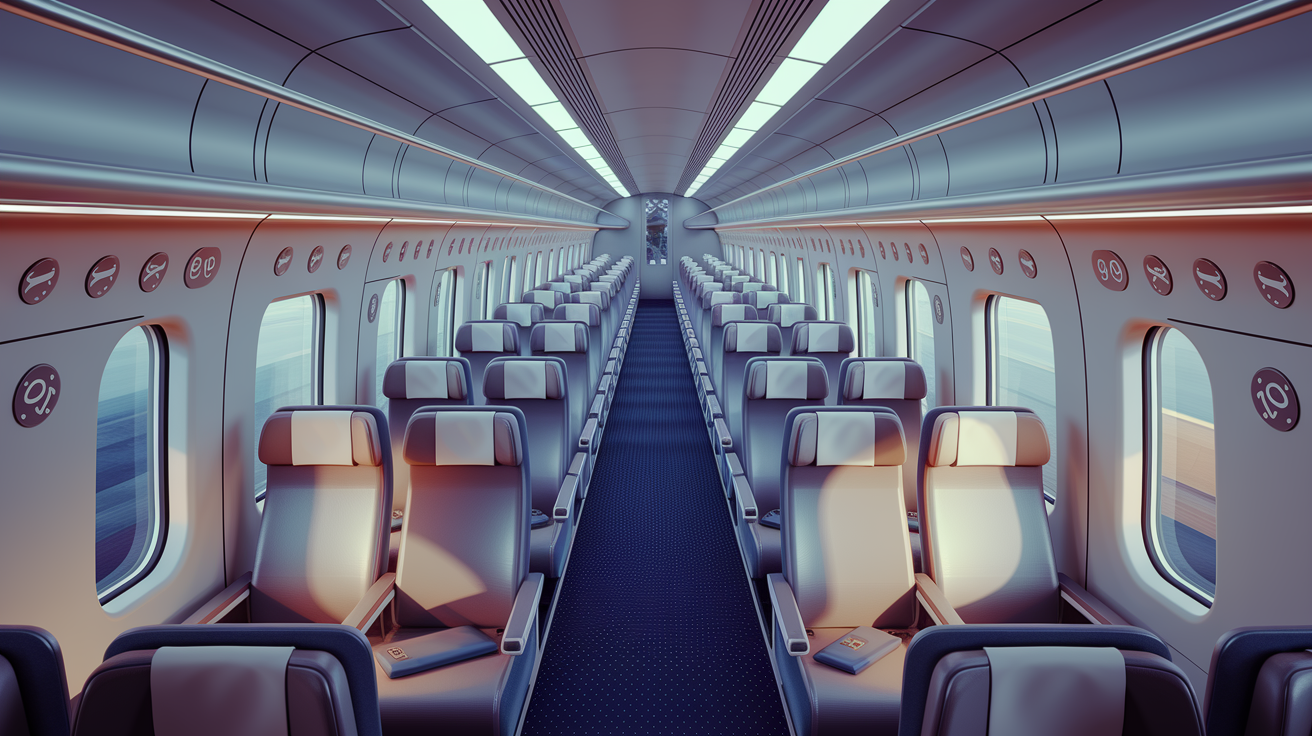
Seat reservations guarantee you a specific seat and carriage. On Eurostar, TGV, AVE, and most Italian high-speed trains, reservations are mandatory and included in the ticket price or added as a separate fee ranging from €6 for domestic high-speed services to €15 to €35 for international and premium routes.
Check if your route requires a reservation. The booking platform will either include it automatically or prompt you to add it before payment.
Review the seat map. Look for quiet zones, family areas, power outlets, tables, or solo seats. First-class maps show more spacious layouts.
Select your preference. Window or aisle, facing forward or backward, near the café car, upper or lower deck (double-decker trains).
Accept that train direction may change. Trains reverse at some stations, so a forward-facing seat at the start may face backward later. Booking systems rarely guarantee direction for the entire journey.
Confirm the reservation fee. For rail-pass holders, seat reservations cost the same as for ticket buyers and must be purchased separately.
On German ICE trains and many regional services, reservations are optional. You can board and sit in any unreserved seat, marked by a small digital display or paper slip above the seat. Reserved seats show the passenger’s route segment, so if a seat is only reserved from Frankfurt to Cologne and you’re traveling Cologne to Berlin, you can use it after Frankfurt.
Payment, Currency, and Checkout When Booking High-Speed Trains
Most European train operators and aggregator platforms accept Visa, Mastercard, American Express, and sometimes PayPal or local payment methods like iDEAL (Netherlands) or Sofort (Germany). Use a card that doesn’t charge foreign transaction fees, because bookings often process in euros, pounds, or other local currencies even when you pay through a U.S. or non-European site.
Some platforms let you choose your billing currency at checkout. Paying in the operator’s home currency (euros for SNCF, pounds for British rail) usually gives a better exchange rate than letting the platform convert to your home currency, which can add 2 to 4% in hidden markup. Compare the total in both currencies if the option appears and pick the lower amount.
After you complete payment, you get an instant confirmation email with a booking reference, ticket file (PDF with QR code), and journey details. Save the email and download the ticket to your phone. Some operators also offer mobile apps where tickets appear automatically after purchase. Skip third-party resellers that ask for extra “service fees” or redirect you away from secure booking pages. Stick to operator sites or well-known aggregators with verified customer reviews.
Receiving and Using High-Speed Train E‑Tickets
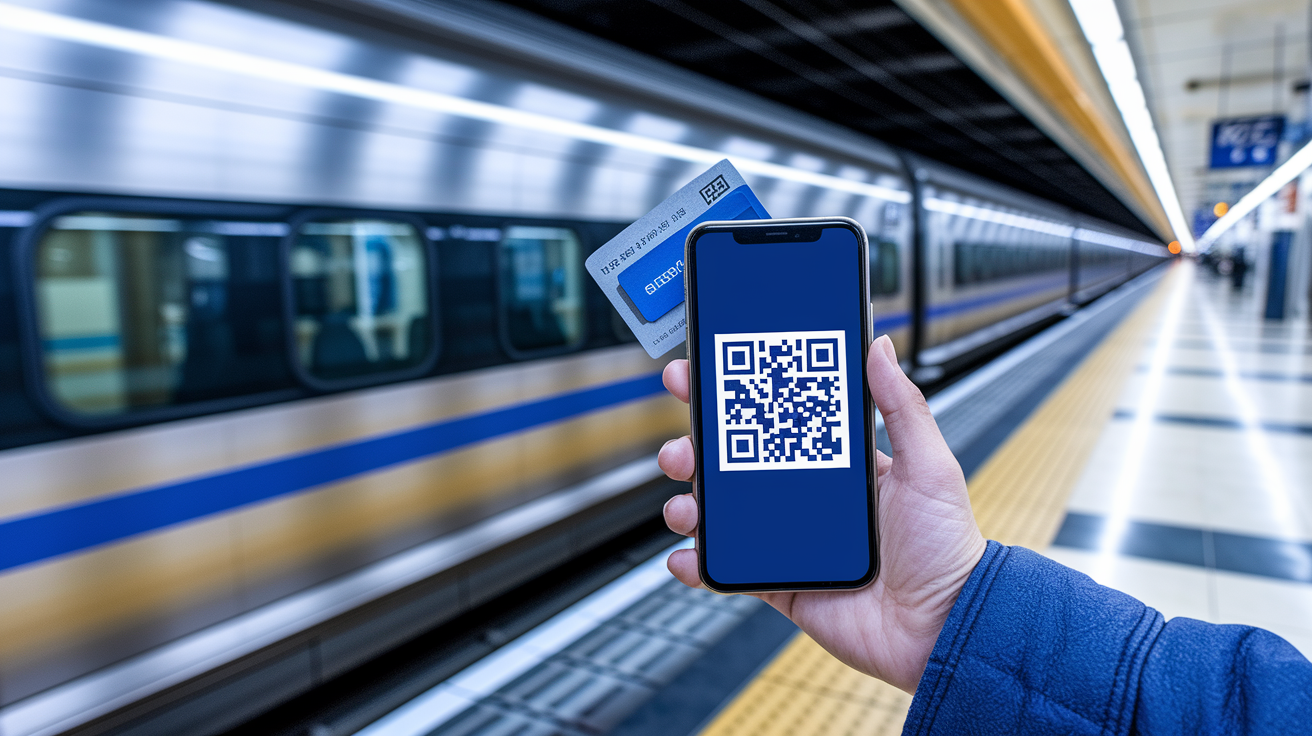
E-tickets and mobile QR codes are the standard format for high-speed trains across Europe. After booking, you get a PDF or app-based ticket with a barcode or QR code that conductors scan onboard.
Download and save immediately. Open the confirmation email, download the PDF, and save it to your phone’s files or a travel folder. Screenshot the QR code as backup in case your email app or internet connection fails at the station.
Add to mobile wallet. Some operators (SNCF, Trainline, Omio) let you save tickets to Apple Wallet or Google Pay for one-tap access.
Print only if required. A few rural or regional operators still ask for paper tickets, but high-speed services across France, Germany, Italy, Spain, and Scandinavia accept mobile tickets without printing.
Bring ID for international trains. Eurostar and cross-border services require a passport or national ID card matching the name on the ticket. Checks happen at departure, and mismatches can prevent boarding.
Most stations have large departure boards showing platform numbers (“Gleis” in Germany, “Voie” in France, “Binario” in Italy) about 15 to 30 minutes before departure. Match the train number and departure time on your ticket to the board, head to the platform, and board any carriage unless your ticket specifies a coach number.
Special Rules for Children, Seniors, Bikes, and Pets on High-Speed Trains
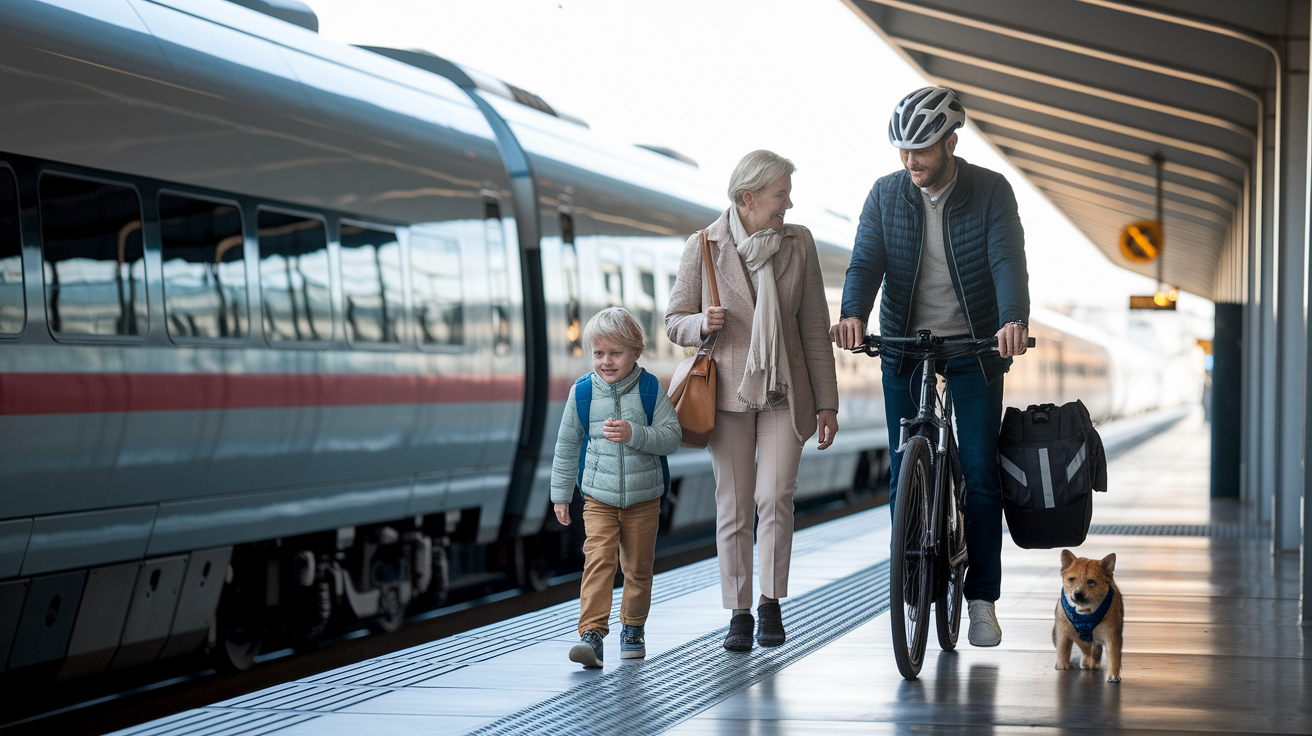
Ticket prices and travel rules for children, seniors, bicycles, and pets vary significantly by country and operator.
| Category | Rules | Notes |
|---|---|---|
| Children | Free travel thresholds: under 4 in France, Spain, Italy. Under 5 in Austria (standard fares), Switzerland. Under 6 in Sweden. Under 12 in Belgium, Denmark. Discounted child fares apply up to age 11 to 16 depending on country. Seat reservations charged at adult rate even for free children. | Always check the specific operator’s age policy. Some discount fares (e.g., German Sparschiene) include free travel for children under 15 when booked with an adult. |
| Seniors | Discounts start at age 60 (France, Italy, Spain, UK, Netherlands, Poland, Turkey), 62 (Slovakia), 65 (Germany, Austria, Switzerland, Belgium), or 67 (Denmark, Norway). Some countries require a senior railcard. Others apply discounts automatically at booking. | Portugal offers 50% off for seniors. Hungary provides free travel for EU citizens over 65. Verify whether a railcard purchase is needed before assuming automatic discounts. |
| Bikes | Policies vary by train type and operator. Many high-speed trains require advance bike reservations and charge fees (€5 to €15). Some don’t permit full-size bikes at all. Folding bikes in bags usually travel free. Regional trains often allow bikes without reservations. | Check the operator’s bike policy before booking. If the route involves multiple trains, confirm rules for each segment. |
| Pets | Small pets in carriers (under ~10 kg) typically travel free or for a small fee. Larger dogs need a leash and muzzle. Ticket cost varies (half-fare in some countries, flat fee in others). Guide dogs always travel free. | Eurostar permits small pets in carriers. TGV and ICE allow dogs but require tickets for animals over a certain size. Confirm specific size and carrier rules on the operator’s site. |
When traveling with children under the free-travel age, you may still need to select “1 child” during booking to reserve a seat or comply with maximum-passengers-per-adult rules (commonly two free children per adult).
Senior and youth discounts often appear automatically when you enter your birthdate at checkout, but some require manual selection of a discount fare type.
Bike reservations for high-speed trains must be added during the booking process. Walk-up bike tickets at the station are rare and spaces sell out.
Navigating High-Speed Train Stations and Boarding Procedures
European high-speed rail stations range from compact single-platform stops to sprawling multi-level terminals with dozens of tracks. Get there at least 30 minutes early for domestic high-speed trains and 45 minutes for international services. That leaves time for security checks, border control (Eurostar and some non-Schengen routes), and platform changes.
Most high-speed trains allow two large checked suitcases plus one small carry-on bag. Unlike airlines, there are no weight limits, but luggage must fit in overhead racks or designated storage areas at the ends of carriages. High-speed trains have limited space, so board early to secure a spot for large bags near your seat.
Find your platform. Departure boards update 15 to 30 minutes before the train leaves. Match your train number and departure time to the board, note the platform number, and head to the correct track.
Look for carriage numbers. Platforms display carriage position markers (A, B, C, or 1 to 12). Find the zone matching your seat’s coach number to board quickly.
Pass security and border checks. Eurostar requires airport-style security and passport control before boarding. Some cross-border trains (e.g., France to Switzerland, Germany to Austria) conduct random checks onboard.
Board without validation. E-tickets don’t need stamping or validation before boarding. Simply show your QR code or PDF to the conductor when they pass through your carriage.
Store luggage efficiently. Place large bags on overhead racks (if they fit) or in the spaces between carriage doors. Keep valuables and travel documents with you.
Prepare ID for inspection. Conductors check tickets and ID on international routes. Mismatched names or missing documents can result in fines or removal at the next station.
If your train departs from a large station with multiple levels or terminals (Paris Gare du Nord, Frankfurt Hauptbahnhof, Milan Centrale), download an offline station map or arrive with extra buffer time to navigate.
When to Book High-Speed Train Tickets for the Best Price
Booking windows for high-speed trains vary by country and operator. The steepest discounts appear when advance fares are first released, typically 3 to 6 months before departure. Prices rise steadily as seats sell and the travel date approaches.
| Country / Operator | Booking Window | Notes |
|---|---|---|
| Germany (ICE, IC) | Up to 12 months | Also applies to Germany to Belgium, Germany to Switzerland, Germany to Netherlands routes. Sparpreis fares released early but limited inventory. |
| France (TGV) | 4 to 6 months (route-dependent) | Gare de Lyon routes (to southeast France, Italy, Switzerland) often open earlier. Prem fares sell out quickly on popular routes. |
| Italy (Frecciarossa, Frecce) | Up to 6 months | Frequent schedule updates and flash sales. Italo (private operator) follows similar windows with competitive pricing. |
| Spain (AVE, Renfe) | 2 to 6 months | Promo and Promo+ fares appear earliest. Round-trip bookings sometimes cheaper than two one-ways. |
| United Kingdom | Up to 3 months (12 weeks) | Advance fares released exactly 12 weeks before departure at 10:00 AM. Off-peak and super off-peak fares offer significant savings outside rush hours. |
| Switzerland (SBB, IC) | Up to 12 months | Supersaver fares available but limited. Most domestic Swiss trains don’t require advance booking for savings. |
Off-peak travel saves money in Britain, France, and parts of Scandinavia. In Britain, traveling after 9:30 AM on weekdays or anytime on weekends triggers lower off-peak fares. In France, blue-period (off-peak) days shown on the SNCF calendar offer cheaper TGV tickets than white-period (peak) dates around holidays and summer weekends.
Holiday periods (Christmas, Easter, summer school breaks) sell out weeks in advance and command premium pricing. Book early to avoid paying double for the same route.
Multi‑Leg Itineraries and Connections on High-Speed Routes
Booking trips with two or more trains requires attention to connection times, ticket types, and whether your journey is sold as a single through-ticket or multiple separate bookings.
Search for through-tickets first. Many operator sites and aggregators (Deutsche Bahn, Trainline, Omio) can book multi-operator journeys in one transaction, treating the entire itinerary as a protected connection.
Check minimum connection times. Allow at least 30 minutes between trains at the same station. 45 minutes for international transfers or when changing stations in the same city (e.g., Paris Gare de Lyon to Gare du Nord).
Understand protection policies. If your inbound train is delayed and you miss your connection, a through-ticket usually lets you board the next available service without penalty. Separate tickets don’t offer this protection and you may need to buy a new ticket.
Book separate tickets when necessary. Some routes (especially crossing multiple countries or mixing high-speed and regional trains) can’t be combined in one booking. In this case, buy each leg individually and build in larger buffers (60 to 90 minutes) to account for delays.
Save all confirmations. Keep PDFs and booking references for each segment. If a delay causes a missed connection on separate tickets, station staff or customer service may offer a goodwill rebooking, but it’s not guaranteed.
National operators like Deutsche Bahn and SNCF often sell international connections with built-in delay protection. Aggregators simplify the search but may charge booking fees for each leg. Compare total costs and protection terms before deciding between a single through-ticket and separate bookings.
Using Rail Passes for High-Speed Trains
Eurail and Interrail passes offer unlimited train travel across multiple countries for a set number of travel days within a window (4 days in one month, 7 days in one month, 15 days in two months, or continuous travel for one to three months). The Eurail Global Pass covers 33 countries, while regional and one-country passes focus on smaller areas.
Passes make financial sense when your itinerary includes many long-distance high-speed journeys in a short time. A sample 10-day Interrail Global Pass can save up to €430 compared to equivalent point-to-point tickets. For example, €379 total (€301 pass + €78 in mandatory seat reservations) versus €809 for separate tickets on the same routes.
Mandatory seat reservations still apply. Pass holders must pay reservation fees on TGV, Eurostar, AVE, Frecciarossa, and most international high-speed trains. Domestic high-speed reservation fees range from €6 to €10, international from €15 to €35, and night-train couchettes/sleepers from €20 to €45.
Compare pass cost plus reservations against point-to-point tickets. Add up your planned routes’ walk-up or flexible ticket prices, then add reservation fees to the pass cost. If the pass total is lower and you want routing flexibility, the pass wins.
Passes work best for spontaneous travel. Because you don’t need to buy individual tickets, you can change plans on the fly (subject to seat availability on trains requiring reservations).
One-country passes suit deep regional exploration. Unlimited travel within a single country (3 to 8 travel days) priced from $110 to $220+. Useful in Germany, Switzerland, Italy, or France if you plan many day trips from a base city.
Regional passes (2 to 4 countries): Priced from ~$160 to $310+. Examples include Benelux pass, France to Italy pass, or Scandinavia pass. Good for focused multi-country itineraries.
Global pass pricing: 4 days in 1 month from $285. 7 days in 1 month from ~$350. 10 days in 2 months from ~$450. Continuous 3 months from $1,115.
Calculate your specific routes using a pass calculator tool (available on Eurail and Rail Europe sites) before buying. Passes rarely save money for travelers making only two or three trips, but they shine for week-long or month-long adventures covering five or more countries.
Common Booking Problems and How to Fix Them
Even straightforward bookings can hit snags. Understanding frequent issues before you book saves time and money.
Platform fees add up quickly. Aggregators may charge 3% per ticket or a flat fee around €6.95 per transaction. For a family of four on a round-trip, that fee can reach €30 to €50. Booking directly on the national operator’s site skips these charges but may require creating separate accounts for each country.
Short advance windows near the December timetable change (second Sunday in December) limit availability. European rail schedules are updated once a year, and during September through early November, booking engines may only show trains up to early December instead of the usual 3 to 12 month window. Wait until mid-November to book travel after the timetable change date.
Discount fares are almost always non-refundable. If you book the cheapest advance ticket and your plans change, expect to lose the full ticket cost. Semi-flexible or flexible fares cost 20 to 50% more but allow changes and refunds, which can be worth it for uncertain itineraries.
Missing connections on separate tickets leaves you unprotected. If you book Paris to Lyon and Lyon to Geneva as two separate tickets and the first train is delayed, you’re not entitled to rebooking on the next Geneva train. Build large buffers (60+ minutes) or pay slightly more for a single through-ticket with delay protection.
Split bookings across multiple operators or aggregators complicate refunds and changes. Keep all confirmation emails, booking references, and customer-service contact details in one place. If a problem arises, contact the issuing company (not the train operator) for support.
Always read fare rules before completing payment, especially cancellation and change policies.
Compare total cost including fees across platforms. Cheapest base fare doesn’t always mean lowest total.
Use official operator apps for real-time platform updates and delay alerts.
Screenshot or download tickets immediately after booking. Don’t rely on email alone.
Check passport and ID requirements for cross-border routes, especially Eurostar and non-Schengen travel.
Final Words
Book your route, compare operators and fares, pick a seat reservation, and finish payment, that’s the quick flow we laid out. We walked through operator choices (TGV, ICE, Eurostar, AVE, Frecciarossa), best booking sites, fare types, reservation rules, e-tickets, station tips, passes, and common fixes.
Use this step-by-step guide to booking high-speed trains in Europe to keep the process simple and calm. Give yourself buffer time, have your tickets and ID ready, and enjoy the ride.
FAQ
Q: How do I book high-speed trains in Europe?
A: Booking high-speed trains in Europe follows seven clear steps: enter departure and arrival, compare times and prices, choose class, add seat reservation if needed, pay, then receive your e-ticket or QR code.
Q: Which high-speed operator should I choose?
A: Choosing a high-speed operator depends on route and priorities: Eurostar for UK-Europe, TGV for France, ICE for Germany, AVE for Spain, Frecciarossa/Italo for Italy; compare fares, speed, and reservation rules.
Q: What websites or apps are best for booking European high-speed tickets?
A: The best booking channels mix operator sites (SNCF, DB, Trenitalia, Renfe) for lowest domestic fares and aggregators (Trainline, Omio, Rail Europe) for multi-leg planning, while noting possible aggregator fees.
Q: Do I need to reserve a seat on high-speed trains?
A: Seat reservations are mandatory on Eurostar and many TGV, AVE, and Frecciarossa routes; optional on most German ICE trains; reservation fees typically range €6–35 depending on route and operator.
Q: When do booking windows open for European high-speed trains?
A: Booking windows vary: Germany and Switzerland up to 12 months, France and Italy about 4–6 months, Spain 2–6 months, UK around 3 months—book early for the best fares.
Q: How do e-tickets and QR codes work for boarding?
A: E-tickets and QR codes are widely accepted; you’ll get a mobile or printable ticket after payment, screenshot it, and carry ID for international routes like Eurostar where checks may apply.
Q: How much can I save by booking early and when should I buy?
A: Booking early can save up to about 60% on advance fares; best savings often appear 3–6 months before travel—match timing to each operator’s booking window and avoid holiday peaks.
Q: What payment tips avoid extra fees at checkout?
A: Use cards with no foreign transaction fees, pay in local currency when offered, prefer national operator sites to avoid markup, and review totals before confirming to spot hidden conversion charges.
Q: Can I use rail passes on high-speed trains and are reservations extra?
A: Rail passes like Eurail and Interrail work on many high-speed routes but often require paid seat reservations; expect extra reservation costs around €6–35 per high-speed train.
Q: What are common booking problems and quick fixes?
A: Common problems include non-refundable discount fares, split-ticket connection gaps, and platform fees; fix these by checking refund rules, adding longer connections, or contacting the operator to rebook.
Q: What rules apply for traveling with children, seniors, bikes, and pets?
A: Rules vary: child age cutoffs differ by country, seniors usually get discounts from about 60, bikes often need reservations, and small pets under 10 kg typically travel in carriers for a small fee or free.
Q: How much time should I allow at stations and for connections?
A: Allow 30–45 minutes before international departures, and plan at least 30–45 minutes for connections; busy stations, border checks, and luggage can add unexpected delays.