
Can I take a stroller through airport security screening?
Short answer: yes, strollers, car seats, and carriers are allowed, but everything gets screened.
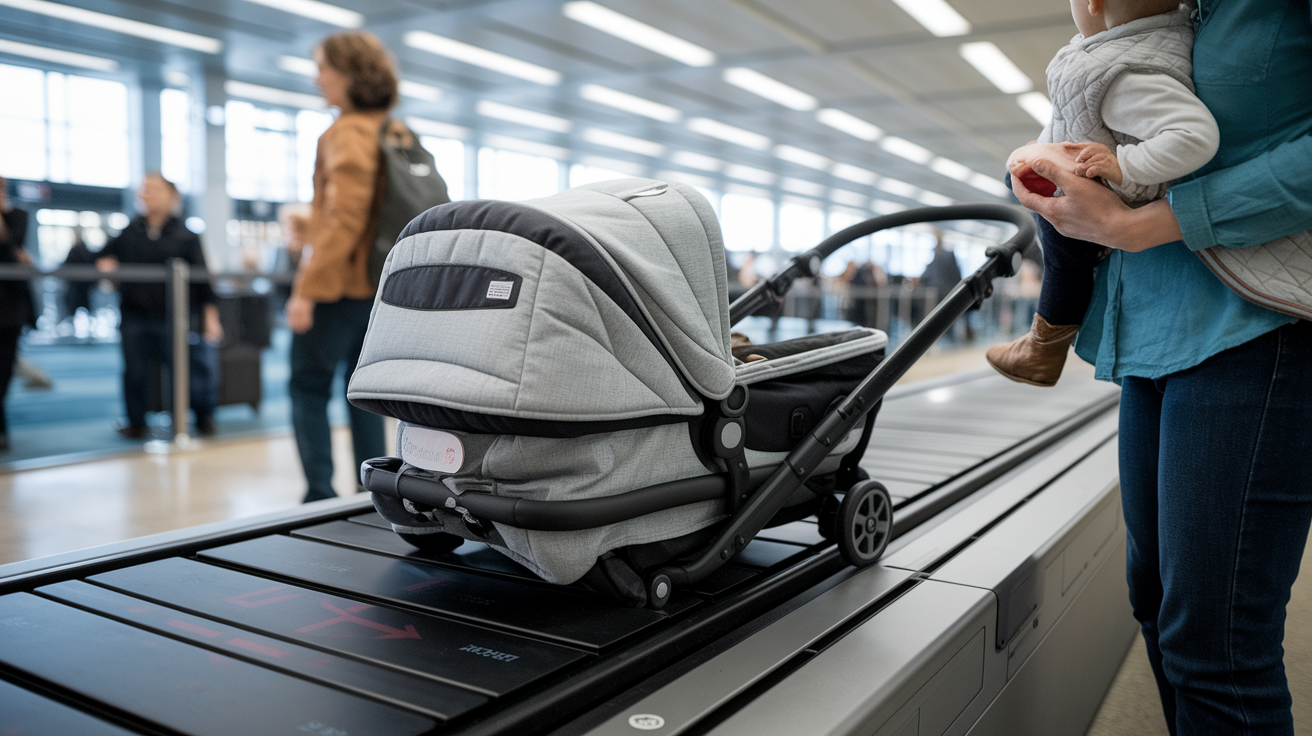
Smaller strollers usually go through the X-ray; big travel or jogging models get a quick manual check and you’ll carry your child through the detector.
This post walks you through what to fold, what to pull from pockets, and how gate-checking works so you’ll stay calm and on schedule.
Clear Rules for Bringing a Stroller Through Airport Security
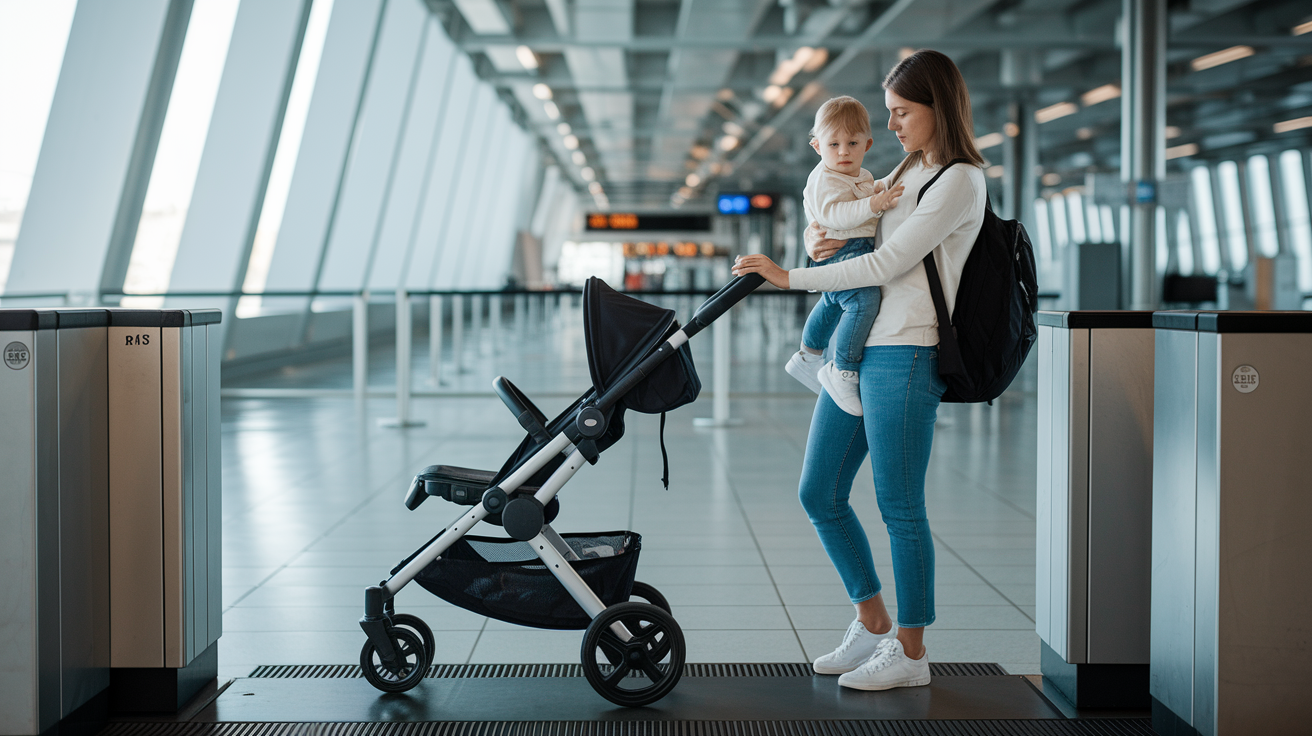
Yes, you can take a stroller through airport security. The TSA allows strollers, umbrella strollers, baby carriers, car seats, and booster seats at every checkpoint, but everything gets screened. Officers will either send your stroller through the X-ray or do a manual inspection if it’s too big for the conveyor belt. You’ll need to take your baby or toddler out of the stroller before you enter the checkpoint.
The screening starts the second you reach the checkpoint lane. Most compact and umbrella strollers fold up and go straight onto the X-ray belt, just like a carry-on. Larger travel systems, jogging strollers, or doubles usually need a visual and physical inspection because they don’t fit through the X-ray tunnel. Officers might ask you to unfold certain sections, remove accessories, or turn the stroller so they can check frame joints and fabric pockets.
Here’s what typically happens:
- Fold your stroller as much as you can before you get to the conveyor.
- Take everything out of pockets, cup holders, and attached organizers. Phones, tablets, bottles, snacks all get screened separately.
- Lift the stroller onto the X-ray belt if it fits. If it doesn’t, tell the officer and wait for instructions.
- Carry your baby through the metal detector in your arms.
- Grab the stroller right after it exits the X-ray or after the officer finishes checking it.
- Put everything back together, reload your child, head to your gate.
Kids under 12 get modified screening. TSA won’t ask young children to take off shoes, light jackets, or hats. No parent gets separated from their child at any point. The metal detectors are FDA-approved for all ages, including infants.
Technical Details of Stroller Inspections and What Officers Look For
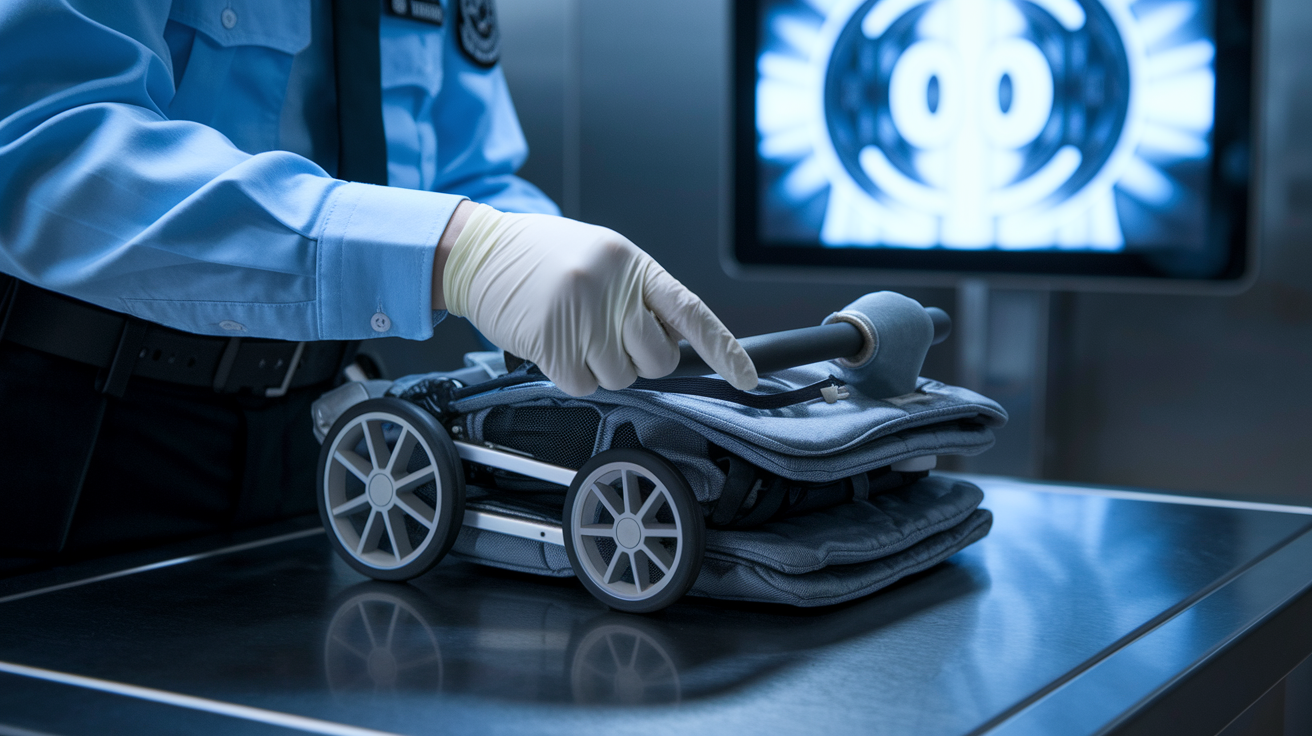
When a stroller goes through the X-ray, the image shows officers the internal structure, metal parts, and anything inside storage compartments or fabric folds. If the scan shows dense areas, weird shapes, or items blocking the view of important parts, they’ll pull the stroller aside for a closer look. This secondary check involves patting down fabric surfaces, inspecting pivot points and locks, and swabbing handles, wheel housings, and the undercarriage basket. The swab gets tested for trace explosives, which adds a few minutes.
Specialty strollers and high-end models with extra features often take longer. Strollers with built-in storage, insulated cup holders, detachable parent consoles, or electronic stuff like battery-powered fans or lights trigger more questions. Officers may ask you to show how a lock works or prove that a zippered pouch only has diapers and wipes. If your stroller has aftermarket add-ons (clip-on toys, phone mounts, organizer bags), expect them to inspect each piece.
Common triggers for manual inspection:
- Thick padding or hidden compartments in the seat back or canopy
- Detachable trays, snack holders, or parent consoles with small items inside
- Wheel assemblies with suspension systems or enclosed axle housings
- Double or tandem strollers with multiple fabric layers and storage zones
TSA Rules for Babies, Car Seats, and Essential Infant Items
Traveling with a baby means gear that solo travelers never think about, and TSA accounts for that. Children under 12 get modified screening at every U.S. checkpoint. Young kids don’t have to remove shoes, lightweight jackets, or hats. Parents with children go through the standard metal detector instead of the body scanner, which keeps families together and speeds things up. TSA won’t separate a parent or guardian from a child during screening.
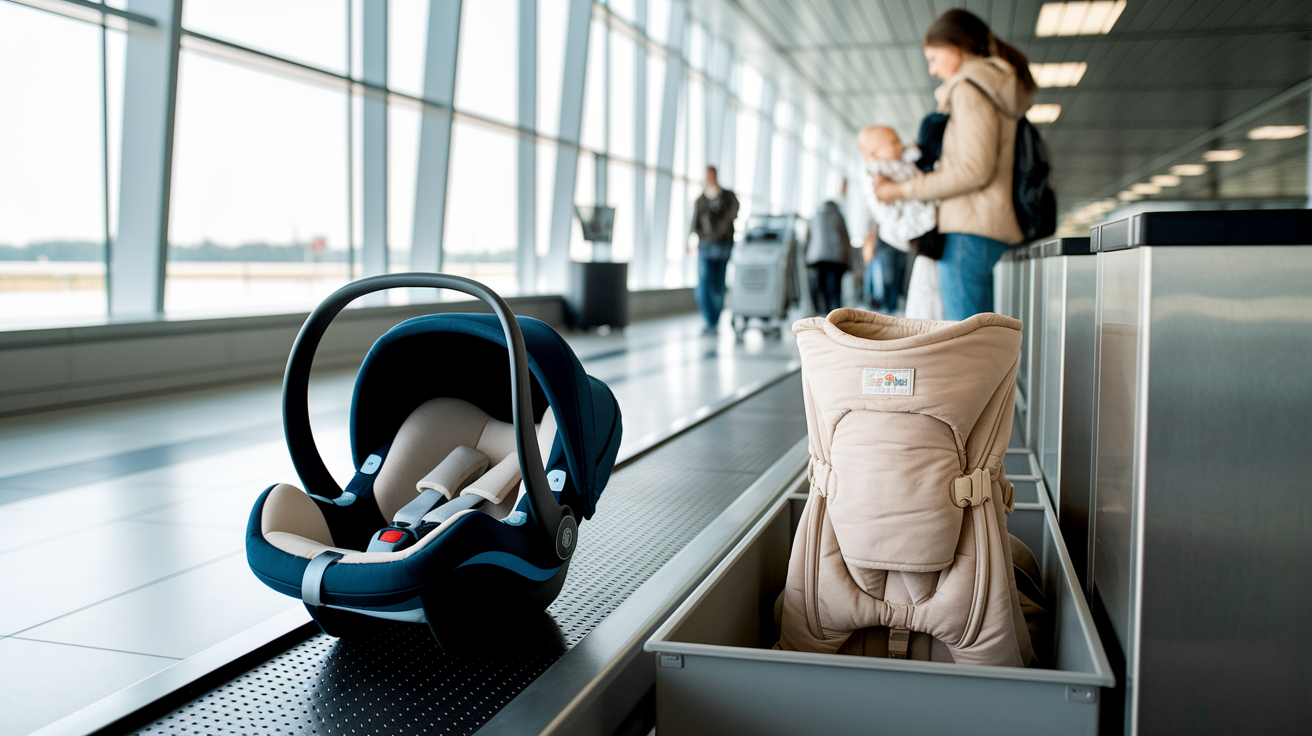
Car seats follow the same rules as strollers. If the car seat fits on the X-ray belt, send it through face-down to reduce its footprint and let the scanner capture a clear image of the shell, harness anchors, and base. Larger convertible seats or models with extended bases might not fit and will get a manual inspection. Officers check the fabric cover, the harness slot area, and any recline adjustments. Booster seats are lighter and almost always fit without issue.
Baby carriers are slightly different. Soft-structured carriers, wraps, and slings usually let you keep your baby against your body as you walk through the metal detector, but the officer makes the final call. Framed backpack carriers or models with metal buckles, rigid hip belts, or aluminum stays are more likely to set off the detector. You might need to take the baby out and send the carrier through the X-ray separately. Less common, but it happens.
Baby Carrier and Car Seat Handling
If you’re wearing a baby in a carrier, tell the TSA officer before you reach the metal detector. Most soft carriers made of fabric and plastic clips will clear without alarms. If it does sound, they’ll ask you to step aside for a quick visual check or a light pat-down of the carrier’s outer surface while the baby stays on your body. Framed carriers should come off before screening, get collapsed if possible, and go on the X-ray belt.
Car seats go face-down on the conveyor to reduce height and help the X-ray produce a usable image. Place the car seat after your carry-on bags and before your stroller if you’re checking both. If you’re traveling solo with an infant and a car seat, ask a TSA officer for help loading the seat onto the belt. Most will assist so you can keep both hands on your baby.
Liquid and Food Rules for Breast Milk, Formula, and Baby Snacks
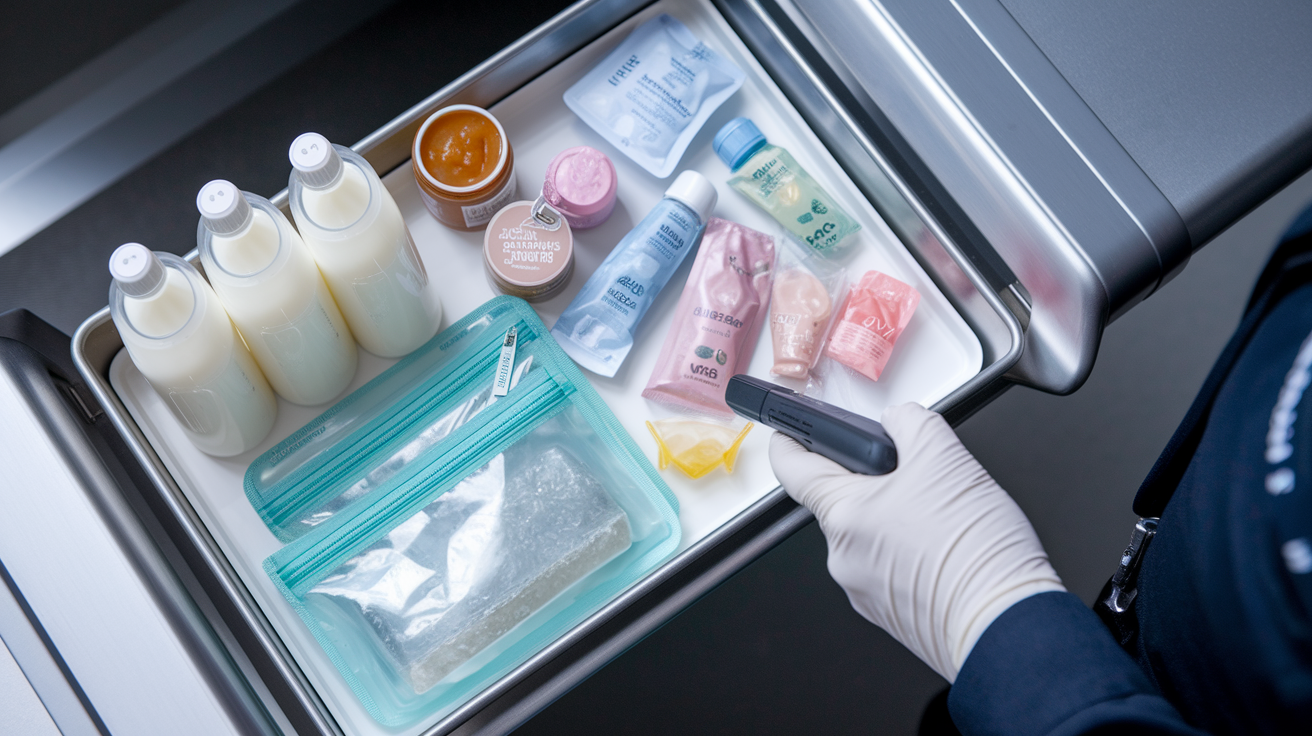
The standard TSA liquid rule caps containers at 3.4 ounces (100 milliliters), all inside a single quart-sized clear bag. But TSA makes an exception for breast milk, infant formula, cow’s milk, juice, and baby food. These items are allowed in quantities larger than 3.4 ounces and don’t need to fit inside the quart bag. You have to declare them to the TSA officer at the start of screening.
Once you declare baby liquids, the officer will ask you to separate them from your other stuff. The bottles, pouches, or containers get visually inspected. Often the officer will open each container to dip a test strip into the liquid or use a handheld scanner to check the contents without opening. Some officers swab the bottle’s exterior instead. This takes a few extra minutes, especially if you’re traveling with multiple bottles of milk or several pouches of pureed food. Clear bottles speed things up because officers can see the liquid without opening anything. Factory-sealed ready-to-feed formula or shelf-stable milk cartons usually just get a quick visual check.
What infant liquids and foods are allowed:
- Breast milk in any quantity, whether the baby’s with you or not. May be X-rayed, swabbed, or opened for a test strip.
- Formula (liquid, powder, or ready-to-feed) in containers larger than 3.4 ounces. Powder typically gets waved through, liquid formula gets tested.
- Juice boxes, milk, or flavored toddler drinks over 3.4 ounces. Screened the same way as breast milk.
- Gel teethers and liquid-filled teething toys. May be opened or swabbed.
- Canned, jarred, or pouch baby food. Unopened containers get inspected visually, opened jars may be swabbed or tested.
- Ice packs, gel packs, or freezer packs used to keep milk cold. Allowed if completely frozen. If slushy or partially melted, the officer will inspect them and might ask you to toss them.
Gate-Checking a Stroller and What Happens After Security
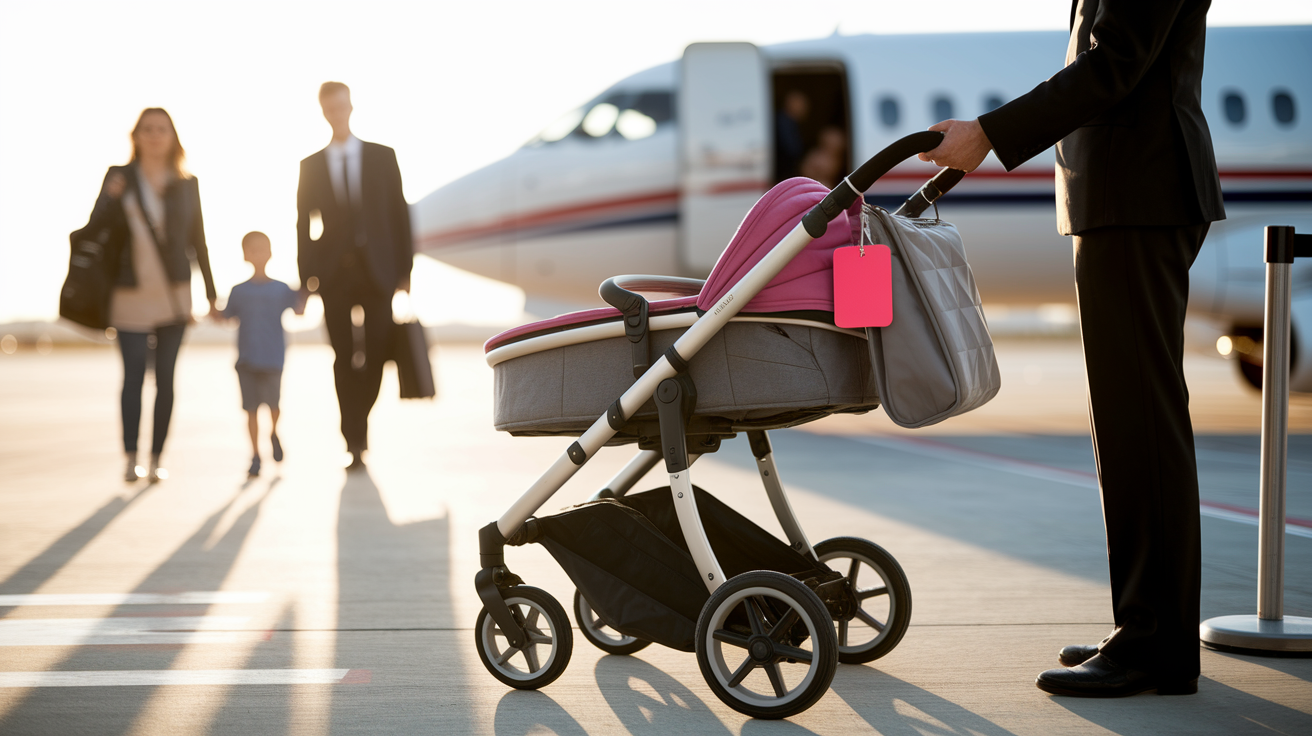
Gate-checking a stroller means you use it all the way to the aircraft door, hand it to a gate agent or ramp worker, and get it back when you land. This service is free on nearly every U.S. airline and doesn’t count against your carry-on or checked baggage allowance. After you clear TSA, you can keep using your stroller through the terminal, onto the jet bridge, right up until you board. The stroller gets tagged with a gate-check label and stored in the cargo hold during the flight.
Start at the gate counter. When you arrive at your gate, tell the agent you want to gate-check your stroller. They’ll attach a brightly colored tag with your flight number and destination and give you a claim stub. Some airlines print the tag from a boarding pass scanner, others use pre-printed adhesive tags from behind the desk. Keep the claim stub in your pocket or diaper bag in case the stroller’s delayed or misplaced, though most strollers reappear without needing it.
After landing, gate-checked strollers come back to you on the jet bridge, at the aircraft door, or just inside the gate area. Wait a moment after you get off. Ground crew typically brings strollers up within a minute or two. If your stroller doesn’t show, check with the gate agent at your arrival gate or go to the baggage claim office. Damage or loss is rare but possible, so look over your stroller before leaving the gate area and report any problems right away.
| Step | Description |
|---|---|
| Tag | Gate agent attaches a colored gate-check tag with flight information and gives you a claim stub |
| Drop-off | Fold or collapse the stroller, remove loose items, and hand it to the agent or ramp worker at the aircraft door |
| Retrieval | Stroller is brought to the jet bridge or gate area within 1–2 minutes after you deplane |
Choosing the Right Stroller for Smooth Airport Security Screening
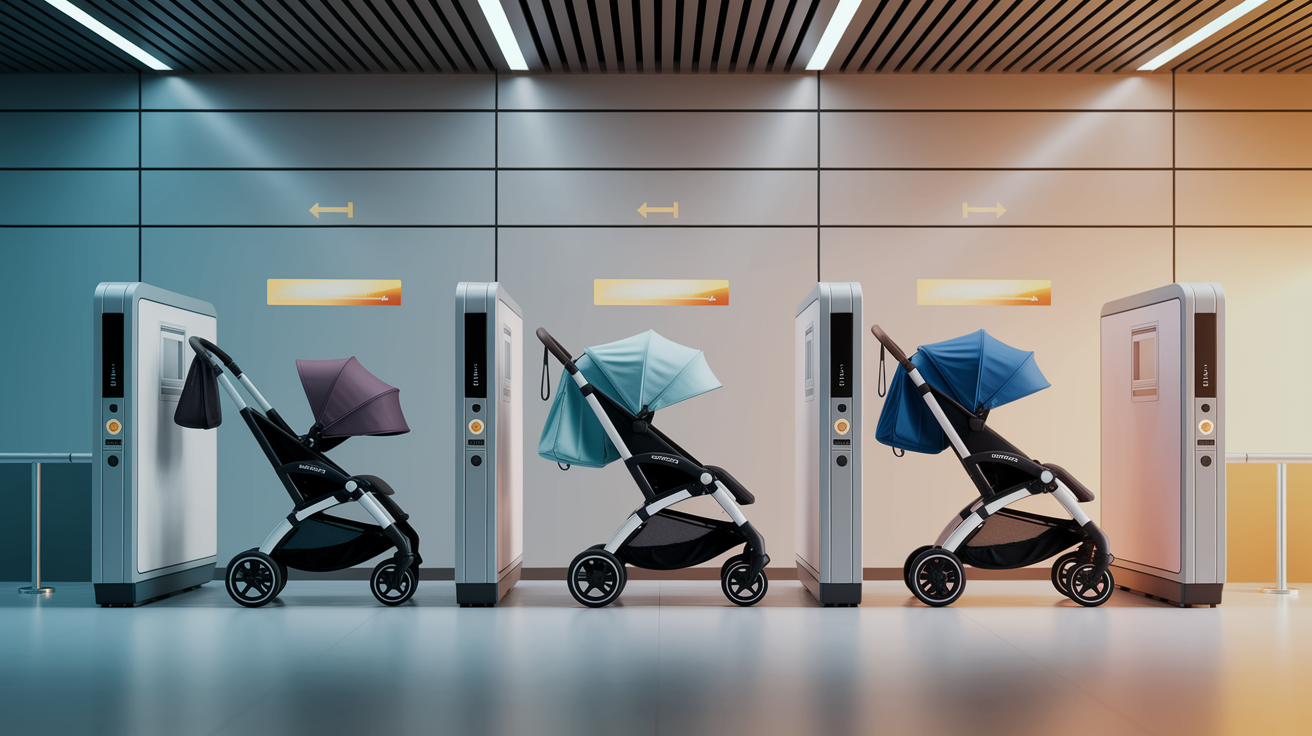
Umbrella strollers and lightweight travel strollers move through airport security faster than full-size travel systems or jogging strollers. A compact model that folds with one hand and fits on the X-ray belt cuts out the need for manual inspection and keeps you moving. If your stroller weighs less than 15 pounds, collapses to a footprint smaller than a standard carry-on, and has minimal accessories, you’ll spend less time at the checkpoint and get fewer questions from TSA officers.
Practice folding and unfolding your stroller at home before your trip. If you can collapse it in under five seconds without messing with latches or foot brakes, you’ll handle the checkpoint with way less stress. Remove or leave at home any add-ons that aren’t essential for the flight. Clip-on cup holders, toy bars, phone mounts, bulky diaper caddies all add inspection time and give officers more stuff to check. A clean, simple stroller frame with just a sunshade and a small storage basket is the easiest to screen.
Features that make a stroller TSA-friendly:
- One-hand fold that collapses the frame quickly
- Compact folded dimensions (under 22 inches in any direction)
- Minimal fabric pockets and no hidden compartments in the canopy or seat back
- Detachable wheels or a fold that reduces height to fit the X-ray tunnel opening
Special Circumstances: Medical Strollers and TSA Assistance
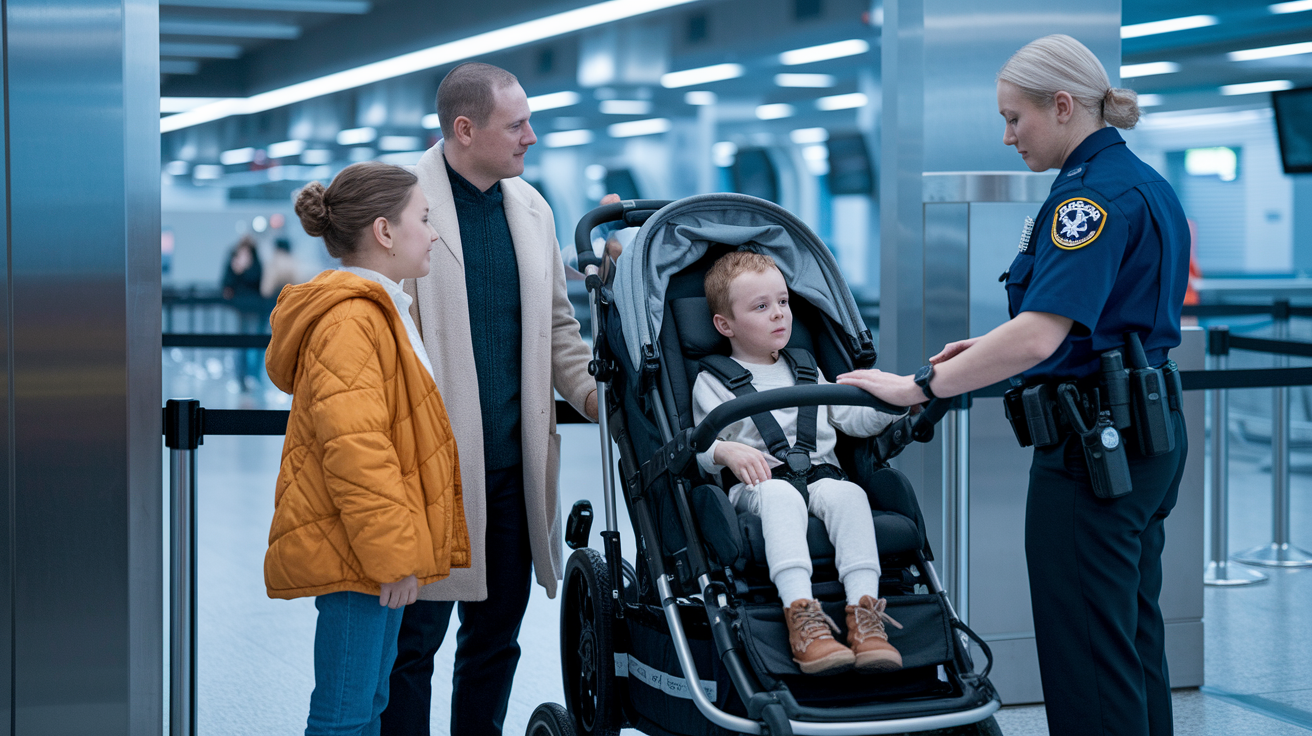
Some children need specialized strollers because of medical conditions, mobility disabilities, or developmental needs. TSA accommodates medical strollers, adaptive pushchairs, and transport wheelchairs, but these items often need extra inspection because of their size, weight, or built-in medical devices. If your child uses a stroller with an oxygen tank mount, IV pole attachment, or custom seating system, tell the TSA officer right away when you reach the checkpoint. Officers are trained to handle medical equipment and will work with you to screen the stroller without making you take apart critical parts.
You’re not required to bring documentation for a medical stroller, but carrying a letter from your child’s doctor describing the equipment and why it’s needed can prevent delays and questions. Some families also bring photos of the stroller’s interior to help officers understand the device without removing padding or harnesses. If an officer asks you to show how a part works or to open a locked compartment, you can decline and ask for an alternative screening method. That’ll take longer, though.
How to Coordinate Assistance Before Travel
TSA offers a program called TSA Cares that gives extra support for passengers with disabilities, medical conditions, or other concerns. You can contact TSA Cares by calling 72 hours before your flight to arrange for an officer to meet you at the checkpoint and walk you through screening. The service is free and helps families avoid confusion when traveling with complex medical equipment or multiple kids with special needs.
For quicker questions, use AskTSA. TSA agents answer from 8:00 a.m. to 6:00 p.m. Eastern Time via text, Twitter, and Facebook Messenger. Text “AskTSA” or the keyword code 275-872 to reach a live agent who can confirm whether a specific stroller model or medical item is allowed and what screening to expect. Responses usually come within a few minutes during operating hours and help you pack right and plan your timeline.
Tips for Getting Through Security Faster With a Stroller
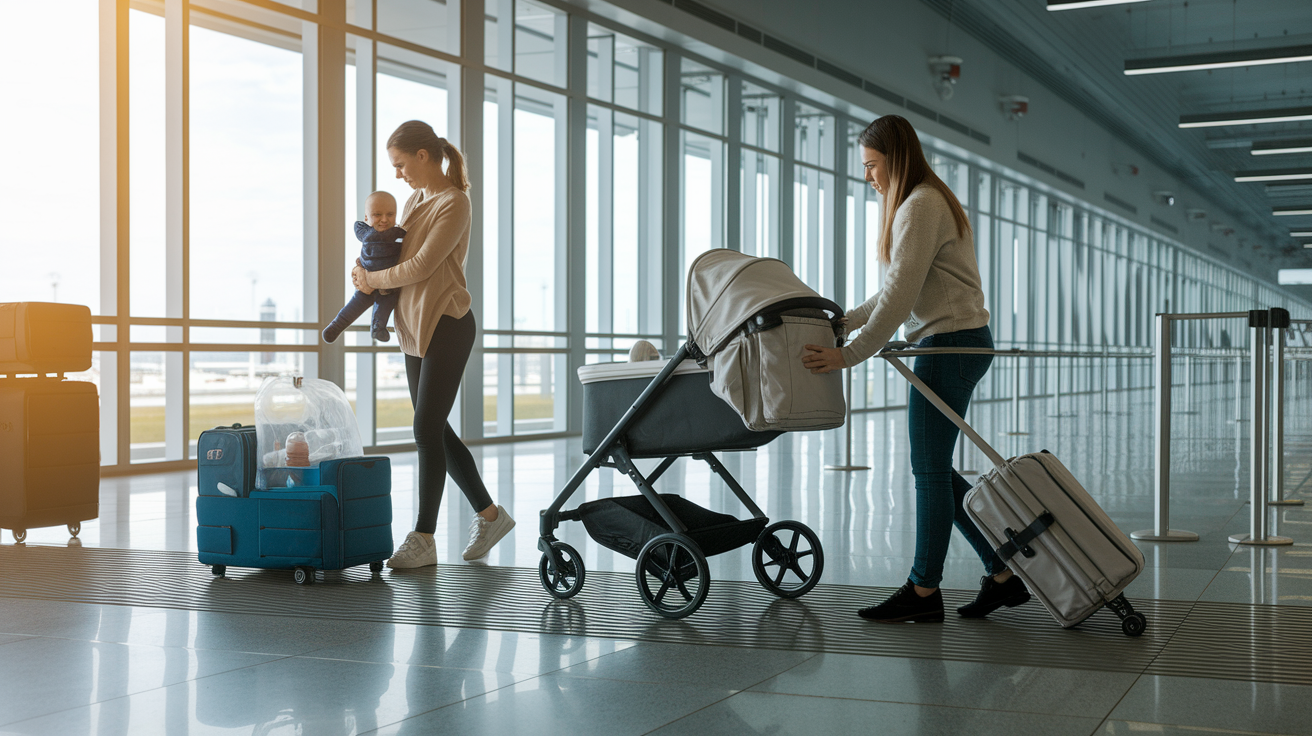
Get to the airport earlier than you would when traveling without kids. The standard recommendation is two hours before a domestic flight and three hours before an international departure, but families with strollers, car seats, and infant gear should add at least 15 extra minutes to cover the longer screening process. If you’re traveling solo with a baby and checking a stroller and car seat, plan for even more time because you’ll need to manage multiple pieces of gear, bins, and a child who might not want to be held.
Keep stroller compartments and pockets totally empty when you reach the checkpoint. Anything stored in a stroller pocket (phone, wallet, pacifier, snack pouch, toy) has to come out and go in a bin before the stroller enters the X-ray. Loading and unloading these small items eats time and creates chances to forget something in a bin or leave it behind on the belt. Pack everything in your carry-on or diaper bag instead, and keep only the stroller frame and fabric in the screening lane.
Steps to speed things up:
- Collapse your stroller before you reach the front of the line so you’re ready when the officer calls you forward.
- Put baby bottles, formula, and breast milk in a clear bag and set it in the first bin so the officer sees it right away.
- Take your baby out of the stroller and any carrier, then walk through the metal detector with the child in your arms.
- Load your diaper bag, purse, and carry-on onto the belt first, followed by the collapsed stroller.
- Put shoes, jackets, and electronics in the last bin so you can grab the stroller and put your setup back together as soon as it clears.
- Have your travel companion go through the detector first, collect bins on the other side, and start repacking while you carry the baby through and get the stroller.
Final Words
You can bring a stroller through airport security; it just needs screening. We covered the essentials: folding, X-ray versus manual checks, removing the child, and what officers may inspect.
We also dug into technical swabs and parts checks, car seats and breast‑milk rules, gate‑checking, picking a travel-friendly stroller, and getting assistance when things aren’t standard. The aim was simple: less hassle, more breathing room.
Can I take a stroller through airport security screening? Yes, and with a little prep—fold practice, empty pockets, clear bottles—you’ll get through faster and start your trip calm and ready.
FAQ
Q: How do you bring a stroller through airport security?
A: Bringing a stroller through airport security means removing your child, collapsing the stroller and sending it through the X‑ray if it fits; larger models get a manual inspection and pockets may be checked.
Q: Is it better to check or gate check a stroller?
A: Whether to check or gate-check a stroller depends on convenience: gate-check to keep it until boarding and retrieve at the jet bridge; check at the ticket counter if it’s oversized or you won’t need it on arrival.
Q: How much does it cost to check a stroller at the airport?
A: The cost to check a stroller at the airport is usually free when gate-checked; some airlines may charge for checked-baggage or oversized items, so verify your airline’s policy before travel.
Q: Can I take a stroller on a plane for free?
A: You can usually bring a stroller to the gate for free and gate-check it; taking a stroller into the cabin depends on airline carry-on rules and size, and is seldom allowed.